The future has landed.
And there are no hoverboards or flying cars.
Just scientists. Lots and lots of scientists.
And there are no hoverboards or flying cars.
Just scientists. Lots and lots of scientists.
A little about me
I'm a Computer Science and Math double major at the College of William & Mary, graduating Spring 2027.
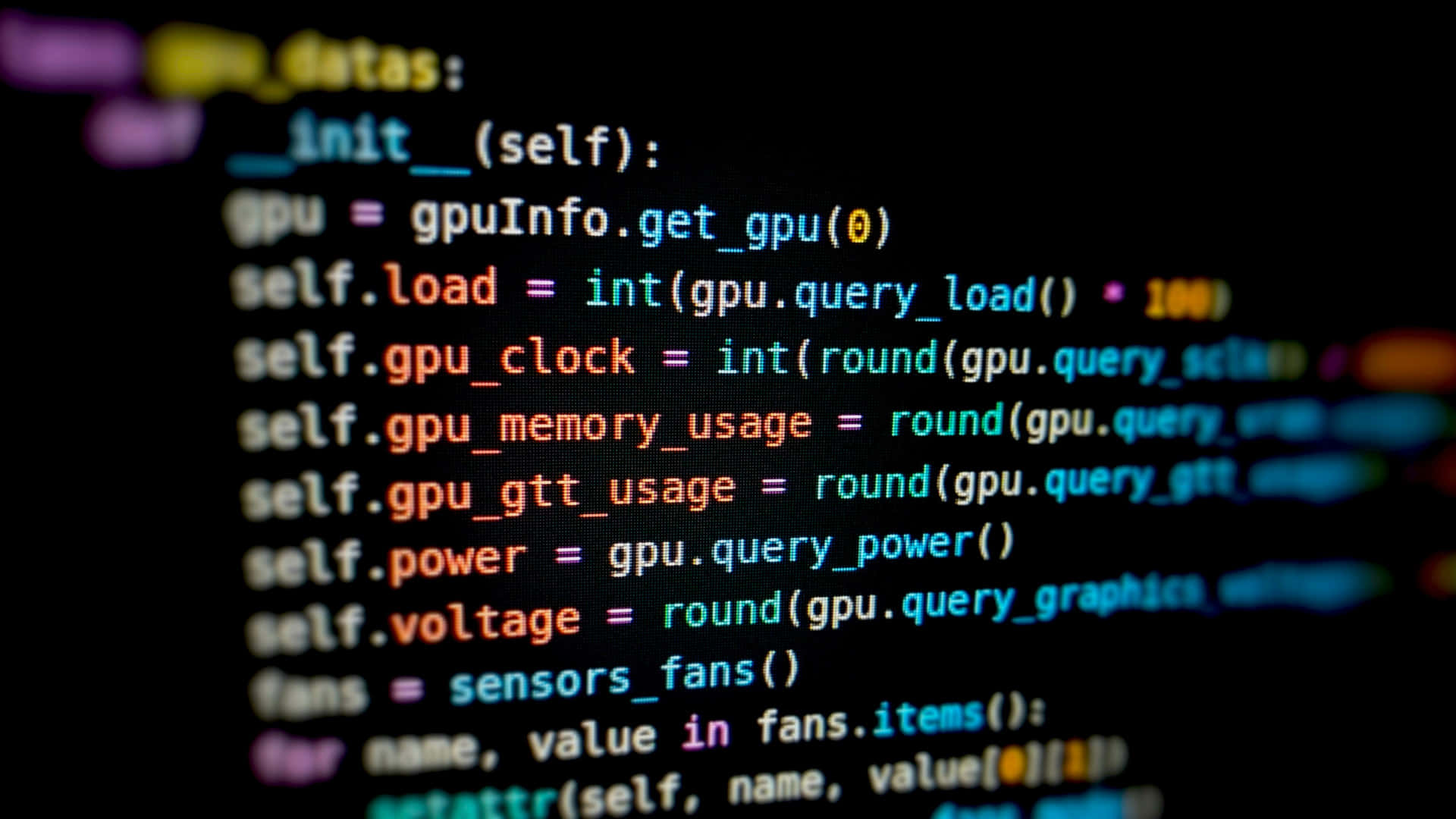
I specialize in low-level performance optimization in C/C++, and applied math. I enjoy working with all sorts of applied math and physics applications like: orbital mechanics, numerical methods, signal processing, neural networks, and more.
I seek to understand the intersection of math and computer science, and how they can make the world into a better place. Feel free to check out my experience below.
Xona Space Systems
Working on developing Xona's Pulsar: the most advanced and resilient positioning, navigation, and timing infrastructure in the world. With some in-depth performance analysis, I'm currently improving C++ algorithms related to satellite navigation, orbital mechanics, signal processing, as well as signal encryption and authentication. I have improved performance of Xona C++ orbital mechanics algorithms, as well as software defined radio tracking and pulse blanking algorithms.

Advisor: Professor Bin Ren,
Dept. of Computer Science of W&M
I'm currently researching World Action Models and entropy-based methods to optimize computation time and memory management. I'm exploring entropy-based token filtering and pruning algorithms for long context windows, and I developed from scratch a basic C++ LLM inference engine: llm.cpp, to examine LLM forward passes under-the-hood. Year long research will culminate in an undergraduate honors thesis and potential publication.
Developed from scratch a basic C++ LLM inference engine: llm.cpp, to examine LLM forward passes under-the-hood. Implemented full transformer inference architecture (including custom tensor class and tensor operations), providing a text generation response mechanism from the pretrained model TinyLlama-1.1B-Chat-v1.0.
Researched various topics in high performance computing such as SIMD and SIMT instruction execution, performance optimization on CPU and GPU architectures, parallel and distributed computing, multi-threaded algorithms, memory and cache cache-efficient code optimizations in C/C++. I made use of: CUDA, MPI, and OpenMP.
I implemented in C++ multiple forms of the matroid (an algebraic structure from combinatorial optimization) and showed empirically that matroids can solve many seemingly unrelated problems.
- Edsger Dijkstra